Exploring the Benefits of Sub Arc Welding in Stainless Steel Applications
Understanding Sub Arc Welding
What is Submerged Arc Welding?
Submerged Arc Welding (SAW) is a highly efficient welding process that employs a continuously fed electrode and a granular flux to create a protective environment around the weld. This method is particularly beneficial for welding materials like stainless steel, which can be sensitive to contamination. The process involves submerging the arc created between the electrode and the workpiece in a layer of flux, effectively shielding it from atmospheric gases, thereby minimizing oxidation and other defects. The result is a cleaner and more precise weld. Welders favor this technique for its ability to produce deep penetration welds, which are essential for thick materials often found in large fabrication projects.
How Sub Arc Welding Works
In submerged arc welding, a DC or AC power supply feeds electricity to an electrode wire, creating an arc between the wire and the base metal. The flux, usually made from a mixture of metallic oxides and other materials, is poured over the weld area, covering the arc. This not only protects the weld from contaminants but also produces a slag that cools and solidifies to form a protective layer over the finished weld. The continuous feeding mechanism ensures a steady supply of electrode and flux, allowing for uninterrupted welding. This process can be automated, making it ideal for high-volume production environments where consistency and speed are paramount.
Key Components of Sub Arc Welding Machines
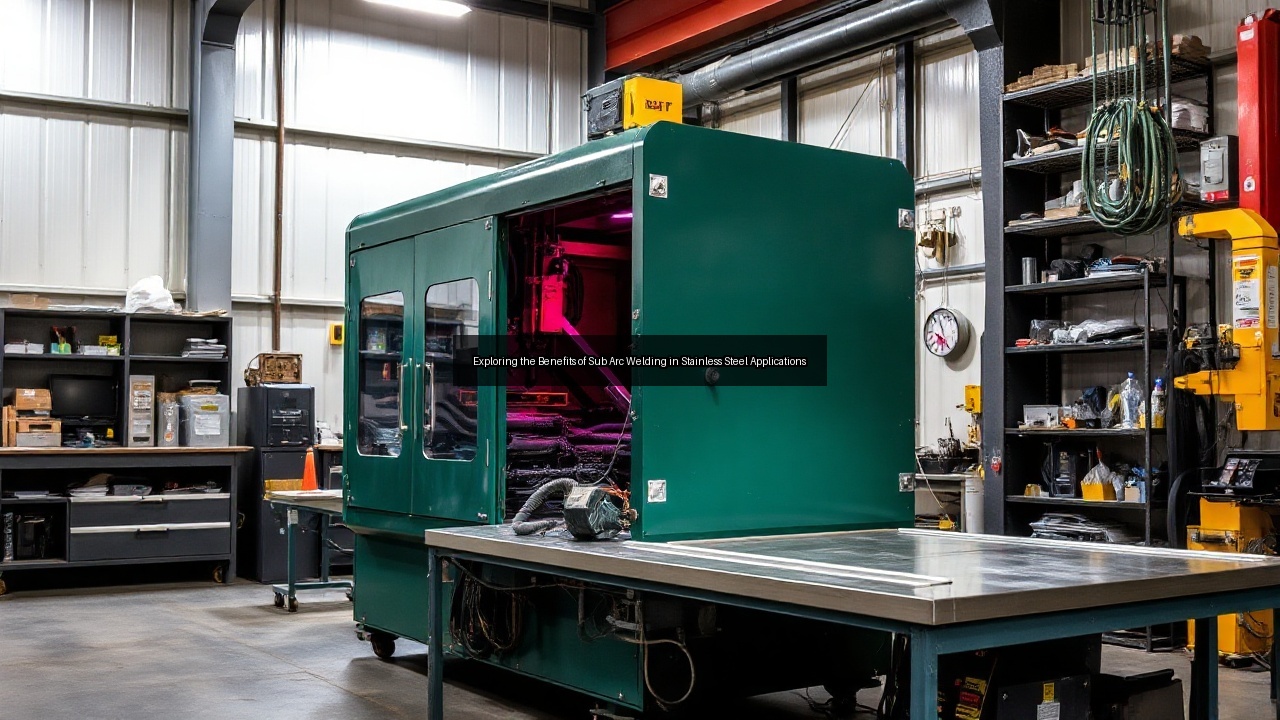
A submerged arc welding machine comprises several key components that contribute to its efficient operation. The power supply delivers the necessary voltage and current to create the arc. Typically, these machines offer adjustable settings for voltage and amperage, enabling welders to customize their output based on the thickness and type of materials being welded. The electrode feeder provides a continuous supply arc welders of welding wire, while the flux hopper holds the granular flux. Additionally, control switches allow for ease of operation, and some advanced models include automated systems that enhance productivity. Brands like ESAB and others offer reliable submerged arc welding equipment suited for various industrial applications.
Advantages of Sub Arc Welding in Stainless Steel Applications
Increased Efficiency and Productivity
Sub arc welding significantly boosts efficiency and productivity, particularly in large-scale fabrication projects. The continuous feeding of the electrode and flux minimizes downtime, allowing welders to complete extensive welds in less time compared to traditional methods. This process also supports high deposition rates, meaning more material can be added per unit of time, crucial for projects with tight deadlines. The automation potential of submerged arc welding systems further enhances productivity by reducing the need for manual intervention. As a result, industries that rely on rapid production cycles, such as construction and manufacturing, benefit greatly from integrating submerged arc welding into their operations.
Enhanced Weld Quality and Consistency
Weld quality is a crucial factor in any fabrication process, and submerged arc welding excels in this area. The protective layer provided by the flux minimizes the risk of contamination, resulting in cleaner, stronger welds. The deep penetration characteristic of SAW ensures that the welds are robust and capable of withstanding significant stress and strain. This consistency in weld quality is vital for applications in industries like aerospace and automotive, where safety and reliability are non-negotiable. Additionally, the controlled environment of the welding process allows for better management of the heat input, further enhancing the quality of the finished product.
Cost-Effectiveness in Large Fabrication Projects
Submerged arc welding proves to be a cost-effective solution for large fabrication projects due to its high efficiency and low operational costs. The ability to weld thick materials in a single pass reduces the amount of time and labor required, translating into lower overall expenses. This efficiency also means that fewer welders are needed for extensive jobs, further cutting labor costs. The durability of the welds produced through SAW leads to lower maintenance expenses over time, making it a wise investment for companies focused on long-term savings. Industries that engage in large-scale manufacturing, such as those producing tractors or heavy machinery, often find submerged arc welding indispensable for streamlining their operations.
Comparative Analysis: Sub Arc Welding vs. Other Welding Methods
Sub Arc Welding vs. TIG Welding
Sub arc welding and TIG (Tungsten Inert Gas) welding serve different purposes and excel in varied applications. While TIG welding offers excellent control over the weld pool and is ideal for thin materials, submerged arc welding provides superior efficiency for thicker sections. TIG requires more manual skill and is generally slower, making it less suitable for high-volume production. In contrast, submerged arc welding automates much of the process, ensuring faster completion times. When working with stainless steel, SAW delivers deeper penetration and stronger welds, beneficial for structural applications where integrity is crucial.
Sub Arc Welding vs. SMAW
Shielded Metal Arc Welding (SMAW), commonly known as stick welding, is another widely used method. While SMAW offers versatility and portability, it lacks the efficiency and weld quality associated with submerged arc welding. SMAW generates more spatter and requires frequent electrode changes, resulting in longer completion times for extensive projects. Conversely, submerged arc welding provides continuous operation with minimal cleanup, making it favorable for industrial settings. The depth and consistency of welds produced by SAW make it ideal for sectors needing high structural integrity, such as shipbuilding and pipeline construction.
Choosing the Right Welding Machine for Your Needs
Selecting the appropriate welding machine involves evaluating various factors, including the types of materials, project scale, and desired weld quality. For heavy-duty applications involving stainless steel and other alloys, a submerged arc welding machine offers significant advantages. Buyers should consider the machine's power supply capabilities, flux delivery systems, and automation features. Brands like ESAB provide a range of submerged arc welding equipment tailored to different industrial needs. Assessing the specific requirements of your projects, such as voltage needs and electrode types, will ensure optimal results and efficiency in your welding operations.
Applications of Sub Arc Welding in Various Industries
Utilization in the Manufacturing of Tractors and Heavy Equipment
Submerged arc welding finds extensive use in the manufacturing of tractors and heavy equipment, where rugged durability is essential. The process allows for welding thick sections of steel and stainless steel, ensuring that the structural integrity of components like frames, axles, and engine mounts is maintained. The high deposition rates enable manufacturers to produce robust welds that can withstand the rigorous conditions these machines encounter in the field. Moreover, the efficiency of submerged arc welding translates into faster production times, allowing companies to meet market demands without compromising on quality.
Sub Arc Welding in Shipbuilding and Marine Engineering
In shipbuilding and marine engineering, submerged arc welding plays a critical role in constructing vessels that must endure harsh marine environments. The deep penetration and strong welds produced by this method ensure that ships can handle the stresses of open water. Additionally, the ability to automate the welding process enhances productivity in shipyards, where large sections of hulls and structures are welded together. The minimal risk of defects associated with SAW makes it a preferred choice for marine applications, where safety and reliability are paramount. Its efficiency also allows for quicker turnaround times, crucial in the competitive shipbuilding industry.
Applications in Oil and Gas Industry
The oil and gas industry benefits greatly from submerged arc welding, especially in the construction of pipelines and storage tanks. The robust welds produced through SAW provide the necessary strength to withstand high pressures and corrosive environments. Submerged arc welding machines enable the joining of thick materials, essential for the structural integrity of pipelines that transport oil and gas across vast distances. The efficiency of the process allows for rapid installation and maintenance of these critical infrastructures, making it a vital tool in ensuring the smooth operation of oil and gas facilities. Additionally, the low defect rate associated with SAW contributes to the overall safety and reliability of operations in this high-stakes industry.